
As cities continue to grow and populations increase, it becomes more urgent to question how we will live. Urbanisation is accelerating at an unprecedented pace, presenting both opportunities and challenges. By 2050, the global urban population is expected to be 68%, nearly doubling the 3.5 billion worldwide in 2010 (United Nations 2019). This rapid urbanisation not only drives the development of new infrastructure but also smart technologies (Shang et al. 2018), such as artificial intelligence and clean energy systems. These innovations are already reshaping how cities and their residents operate and will increasingly define the way we interact with the built environment going into the future.
By examining urban development and smart technology through the lens of Wendell Bell’s possible, probable, and preferable futures (Bell 1998), we can start to see a variety of potential outcomes that could, will, and should happen as cities continue to evolve through to the year 2040 and beyond. How might we next innovate to create cities that are not only efficient but also ethical, inclusive, and sustainable?
The Possible
According to Bell, Possible Futures encompass everything that could happen, regardless of probability. This category includes radical or even unlikely scenarios that are theoretically within the realm of possibility, often explored through futurist thinking.
When imagining the evolution of urban living with smart technology integration, a possible future emerges where AI could govern all aspects of urban infrastructure: Cars, trains, and light rail systems could operate without human drivers, traffic lights become obsolete, and emergency services are dispatched by predictive algorithms. Entire cityscapes could become adaptive, with buildings that self-regulate temperature and lighting based on user behavior. In another scenario, climate refugees could drive the emergence of floating cities or massive vertical urban farms built to feed growing populations.
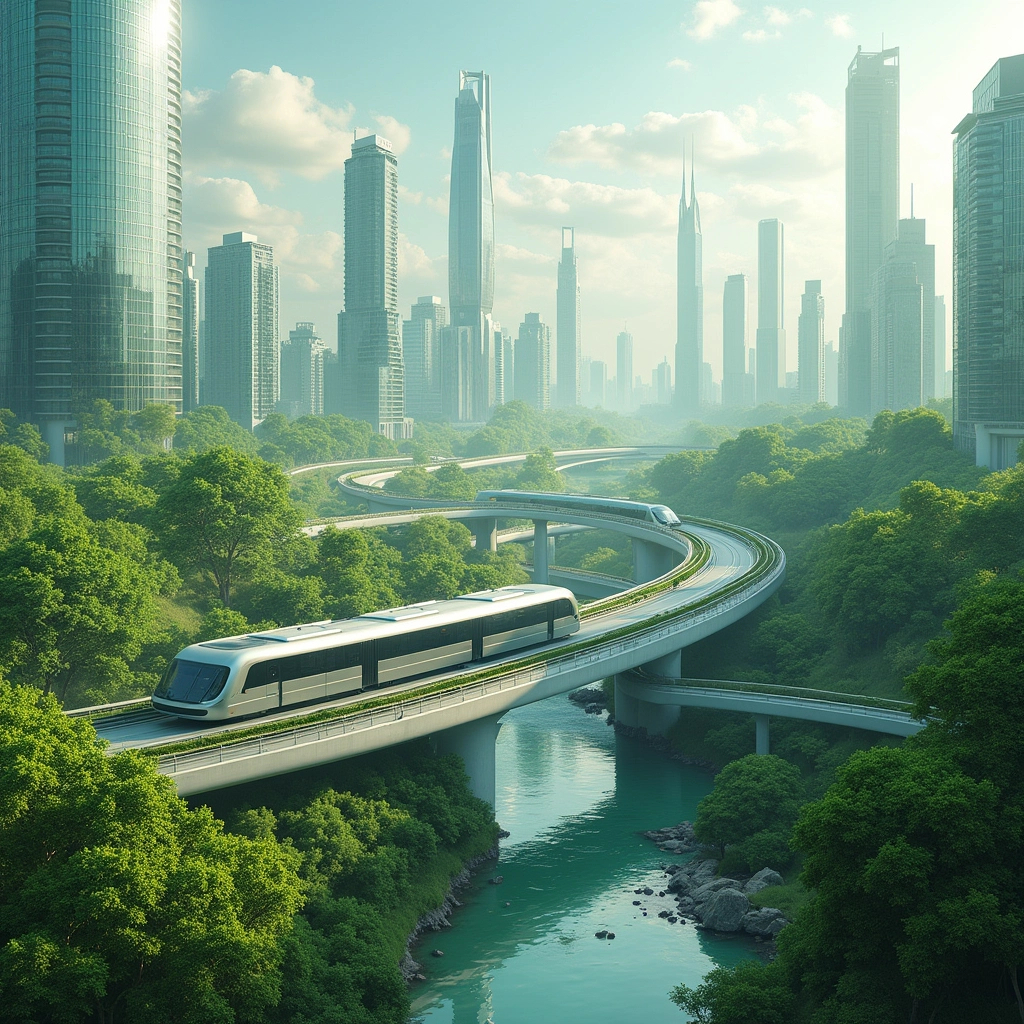
These visions, while extreme, are grounded in real technological and environmental pressures, such as projected sea levels rising 9.3cm by 2040 (Lee & Wang 2023). Futurists and urban scholars have already begun to look at these possibilities. A 2023 report by the Institute for the Future suggests that AI will play a dominant role in public infrastructure by the mid-2030s (IFTF 2020, p. 22), and autonomous public transport systems are being piloted in cities like Singapore and Dubai (Land Transport Authority 2019; Roads & Transport Authority 2019), setting the stage for broader adoption. Meanwhile, experimental designs for smart buildings equipped with renewable energy skins and decentralized resource grids are gaining traction (Lin et al. 2020). While these futures aren’t guaranteed, they highlight the range of urban possibilities on the technological horizon.

The Probable
Probable Futures refer to the scenarios most likely to unfold if current trends continue. These are data-driven projections based on known trajectories in technology, policy, and environmental change.
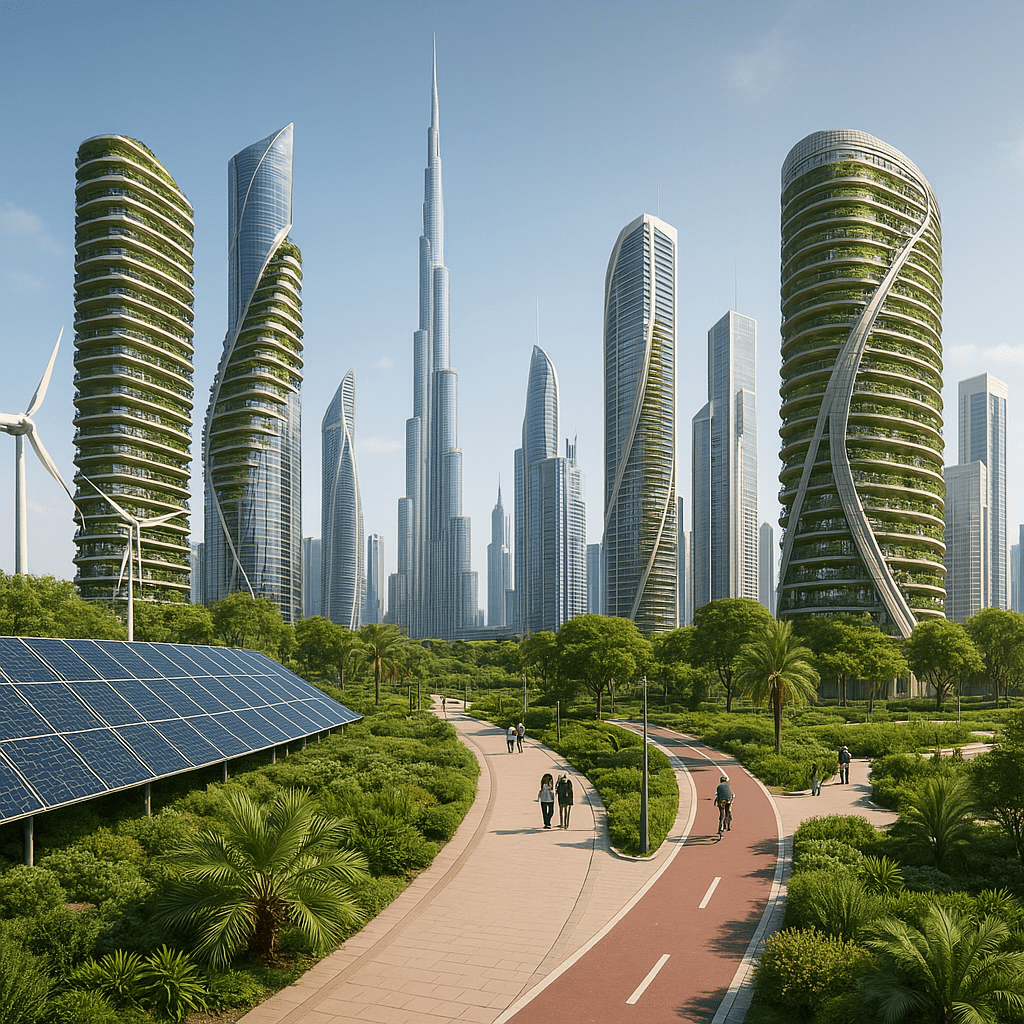
By 2040, many cities are expected to adopt smart grids, integrate AI into traffic management, and embrace electric transport on a large scale (European Commission 2023). Urban environments will become increasingly responsive, leveraging real-time data to manage everything from waste disposal to water use. The World Economic Forum projects that carbon-neutral cities could emerge as early as the 2030s, with nations like Sweden and the UAE already building models such as Stockholm’s Smart City District and Masdar City (Charlton 2023).
However, these developments will not unfold uniformly across the globe. Developing countries face extra challenges such as a lack of information technology infrastructure that would allow them to adopt technologies such as AI or the Internet of things (IoT)(Batmetan & Kainde 2022). Even in developed countries such as Australia, slow policy reforms are hindering progress towards a renewable future. The absence of a carbon tax and inconsistent renewable energy funding have already limited momentum. Challenges such as data privacy, surveillance issues, and affordability must also be addressed for smart city development to be equitable and sustainable.
The Preferable
Lastly, Bell’s preferable futures are guided not by what is possible or probable but by what is desirable. A preferable future should prioritize ethical, social, and environmental outcomes, with their prominent values being equity, well-being, and sustainability.
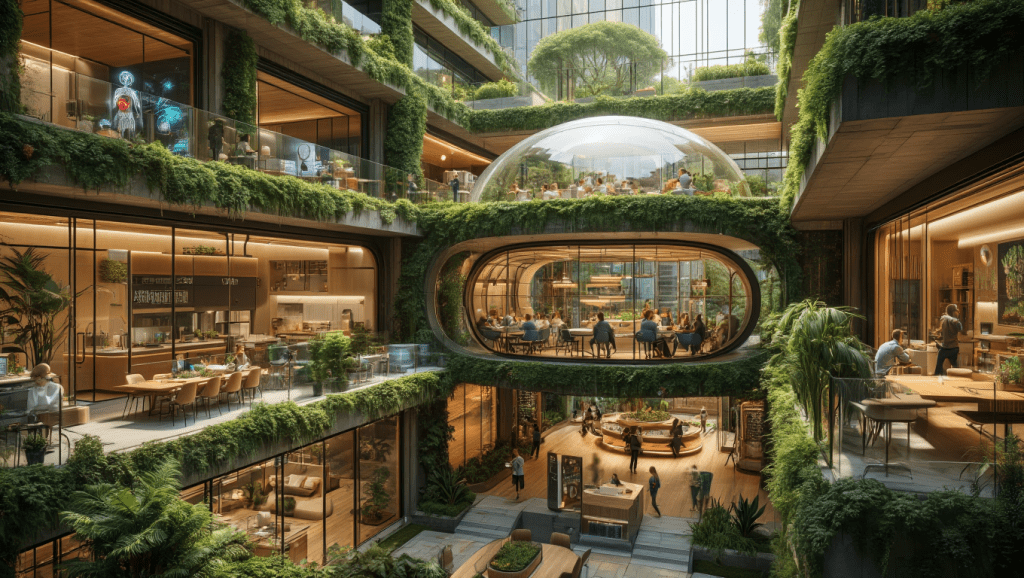
In my ideal version of 2040, smart cities are human-centric. Walkable neighbourhoods are the norm, with a large number of accessible green spaces, locally-grown food, and community health hubs. Smart infrastructure should support rather than replace human interaction, becoming a facilitator of social connection and holistic well-being. Work should be increasingly flexible, allowing people to prioritize mental health, family, and community.
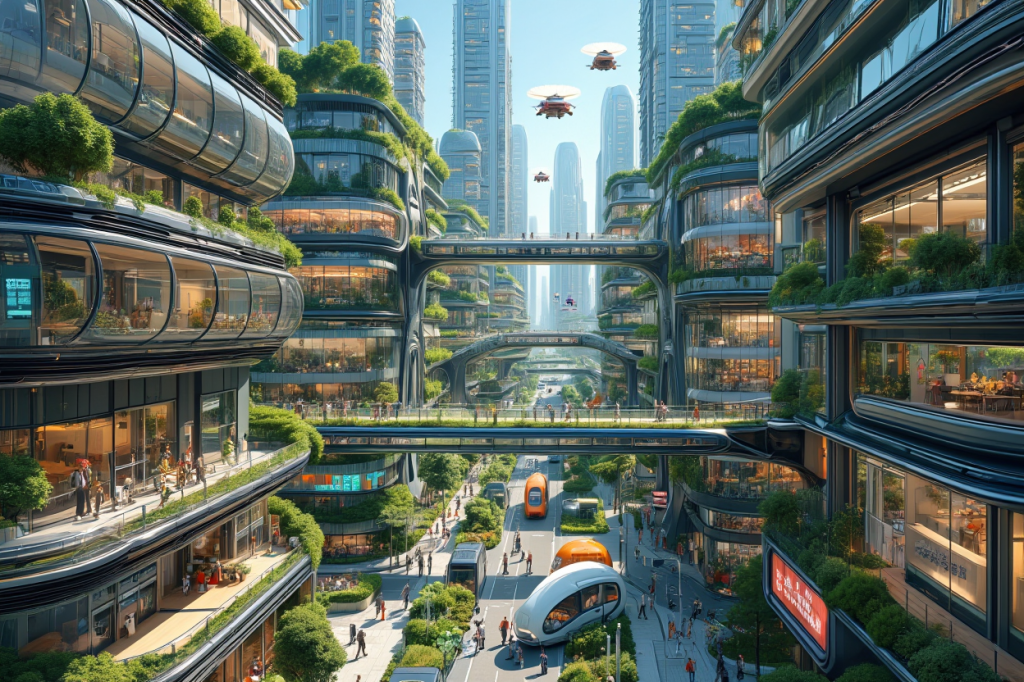
These visions draw from the principles of “15-minute cities” and sustainable urban design, with experts like Jan Gehl and Carlo Ratti advocating for a future where urban life is slower, healthier, and more communal.
Conclusion
As cities continue to grow and adapt, the integration of smart technologies will play an increasingly important role in how urban spaces function and expand. Wendell Bell’s framework—exploring the possible, probable, and preferable futures offers a useful way to think about the future of urban life. The possible futures show us the full range of what technology might make achievable, from AI-managed infrastructure to cities that respond in real time to environmental changes. The probable futures suggest a continued move toward smart systems, cleaner energy, and more data-informed decision-making, though progress will vary depending on local policies and resources.
Preferable futures, however, highlight the importance of keeping people at the centre of development. Ideas like walkable neighbourhoods, flexible work, and access to green spaces are gaining attention because they focus on quality of life, not just technological efficiency. As we look toward 2040, the conversation isn’t just about what’s next in technology, it’s also about what kind of everyday life these changes will support. Considering these different futures can help guide more thoughtful, balanced decisions about how our cities evolve.
References
Batmetan, JR & Kainde, QC 2022, ‘Understanding Smart City Strategy in Developing Country’s Cities’, Theoretical and Empirical Researches in Urban Management, vol. 17, no. 3.
Bell, W 1998, ‘Making People Responsible’, American Behavioral Scientist, vol. 42, no. 3, pp. 323–339.
Charlton, E 2023, 10 Cities That Are Leading the Way with Carbon Emissions Reduction, World Economic Forum.
European Commission 2023, Digitalisation of the Energy Systems, European Commission.
IFTF 2020, The Hyperconnected World of 2030-2040, Institute for the Future, p. 22.
Land Transport Authority 2019, LTA | Autonomous Vehicle Testbed to be Expanded to Western Singapore – Continued Emphasis on Public Safety, http://www.lta.gov.sg.
Lee, JJ & Wang, A 2023, NASA Uses 30-Year Satellite Record to Track and Project Rising Seas, NASA Jet Propulsion Laboratory (JPL).
Lin, Q, Zhang, Y, Mieghem, AV, Chen, Y-C, Yu, N, Yang, Y & Yin, H 2020, ‘Design and experiment of a sun-powered smart building envelope with automatic control’, Energy and Buildings, vol. 223, p. 110-173.
Nuwer, R 2015, Is the world running out of space?, http://www.bbc.com.
Roads & Transport Authority 2019, Dubai Self-Driving Transport Strategy & Roadmap, Government of Dubai.
Shang, J, Wang, Z, Li, L, Chen, Y & Li, P 2018, ‘A Study on the Correlation between Technology Innovation and the new-type Urbanization in Shaanxi Province’, Technological Forecasting and Social Change, vol. 135, pp. 266–273.
United Nations 2019, World Urbanization Prospects the 2018 Revision, United Nations, New York.






Leave a comment