
Critically engaging with The Matrix (1999), Arrival (2016), and Ready Player One (2018) through futures studies reshaped how I think about science fiction. These films are not just entertainment, but spaces for exploring what it means to think about tomorrow. Each was analysed using a different framework: decision-making (The Matrix), time, death, and the Anthropocene (Arrival), and cyberspace (Ready Player One). While each required a different approach, they all showed that futures are not simply imagined in media. They are constructed, debated, and redefined.
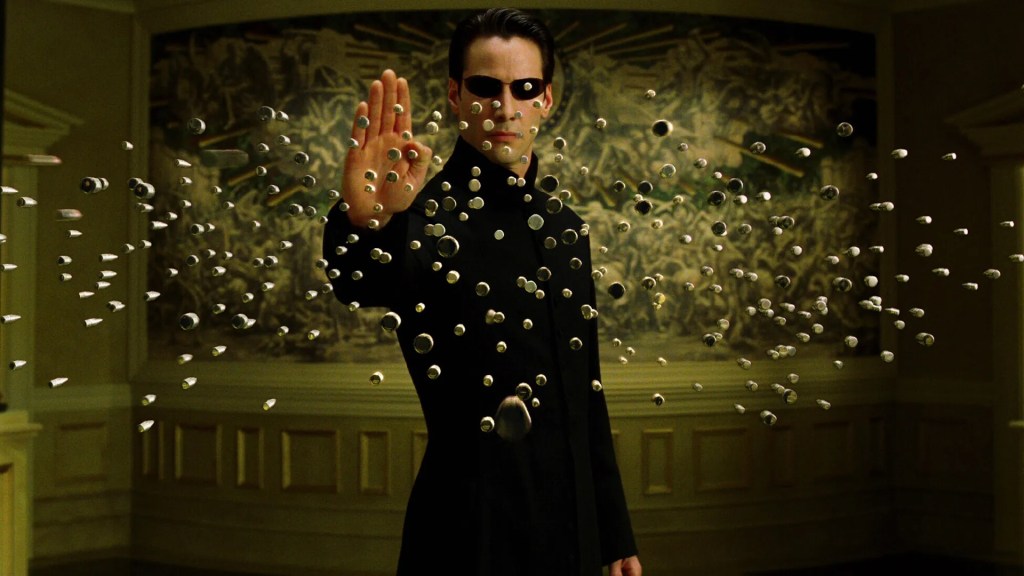
In The Matrix, the decision-making framework helped unpack the idea of choice. The red pill or blue pill moment, often viewed as a simple binary, became more complex when I saw it as a socially loaded act. Morpheus does not just offer Neo a decision. He initiates him into a resistance. The Oracle’s line — “You’re not here to make the choice. You’ve already made it.” — suggests that decisions are often shaped and reinforced by social and cultural systems. This raised questions about my own sense of agency. How much of what I think are personal decisions are actually shaped by the environments I live in?
Arrival challenged my linear understanding of time. The framework of time, death, and the Anthropocene made Louise’s journey more than a twist-based plot. It became a meditation on loss, inevitability, and responsibility. Her decision to have a child despite knowing her daughter’s fate was emotionally difficult to watch. It made me think about the climate crisis. Like Louise, we know the likely outcomes of our actions. Yet we continue forward. Her choice mirrors the human condition in the Anthropocene: acting even when the consequences are already clear.
The aliens’ circular view of time became a metaphor for rethinking how we engage with the world. The film shifted in tone from suspense to something closer to a fable. Its foggy visuals and use of silence symbolised the crossing of boundaries — between past and future, self and other. For me, Louise’s journey became about learning to live with grief and beauty at once. Being human in this context means finding meaning even in the face of loss.
Ready Player One was the most difficult to analyse at first. Its pace and visual density were overwhelming. But using the cyberspace framework helped me see the OASIS as more than a virtual game. It became a site where identity, economy, and memory come together. The film critiques digital escapism, corporate control, and disconnection from physical reality. Yet it also celebrates creativity and connection. This contradiction made it more interesting to reflect on.
The cyborg concept became useful here. The characters exist as hybrids — both digital and physical. Haraway’s cyborg theory suggests that we already live this way. Wade’s act of removing his haptic suit to kiss Samantha felt like a symbolic return to the physical world. The OASIS shutdown two days a week raises an important question. Should technology help us thrive, or do we need to limit it to protect our wellbeing?
All three films centre on choice. In The Matrix, Neo’s decisions are dramatic but deeply personal. In Arrival, Louise’s choice is quiet but powerful. In Ready Player One, Wade’s actions are political and emotional. Together, they show that futures are shaped not just by ideas, but by actions. These choices are individual, social, and ecological.
Doing live analysis pushed me to slow down and look more closely at how these films work. I had to pause and think about visuals, sound, and symbolism, while connecting theory to scenes. It was challenging at times, but it helped me develop a deeper critical approach. I realised that these films are not about distant possibilities. They are about the present.
The Matrix feels especially relevant in a world of misinformation and digital surveillance. Arrival becomes more powerful as we face environmental collapse. Ready Player One speaks to growing concerns about virtual worlds and real-life disconnection.
This process showed me that science fiction can be deeply philosophical. Through difficult choices, non-linear time, and digital realities, these films reflect today’s world more than tomorrow’s. Futures studies helped me see them not as predictions, but as urgent questions about how we live now.




 Lazy Pages
Leave a comment