
Have you ever thought about why you think what you think?
In a digital world where news is finding us everywhere we go, it’s hard to separate fact from opinion. When consuming news media, whether it be while watching television or scrolling through Facebook, you wouldn’t think that all news has some sort of angle. Well, it does, and it’s catered to your own. This is because, whether it is concious or not, the information that you consume and relate to often confirms your pre-existing attitudes and beliefs (Ling 2020). This is called confirmation bias.
Confirmation Bias:
“People’s tendency to process information by looking for, or interpreting, information that is consistent with their existing beliefs.“
Casad and Luebering (2023)
Confirmation bias can be dangerous because it makes it easier for us to fall for fake news (Temming 2024), and fighting our confirmation bias is especially hard online because of algorithms that are great at creating echo chambers. These echo chambers are environments where you only encounter opinions or information that are the same as or reinforce your own beliefs (GCF Global 2019).
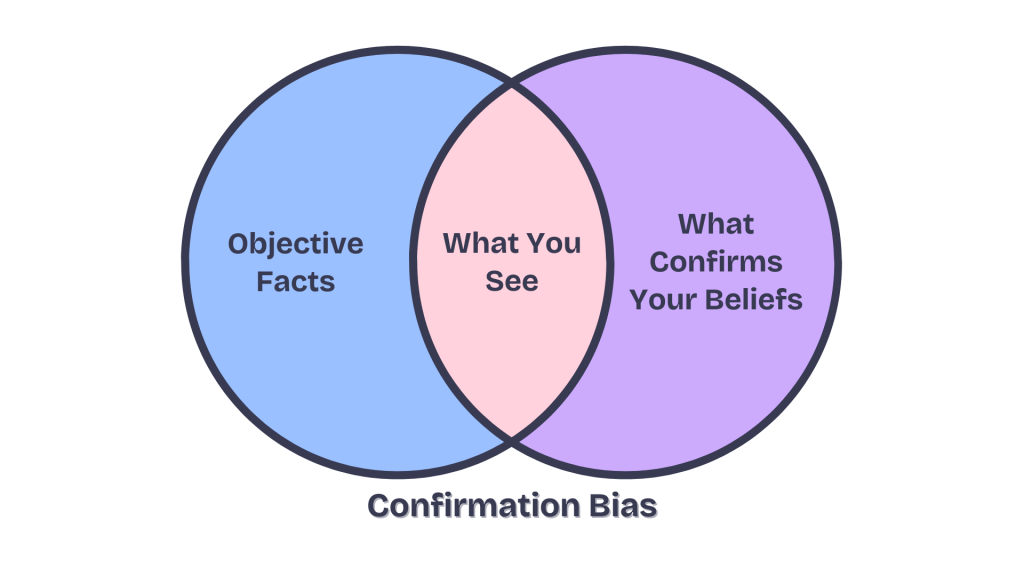
For example, during the pandemic, many people dubbed ‘anti-vaxxers’ would seek out and share anti-vaccination material from news sources or social media influencers. This behaviour was also exhibited by Trump supporters during the January 6 United States Capitol attack where a violent mob attempted to overturn the 2020 Presidential Election after being misled by Trump’s accusations of rigged election results (Mascaro et al. 2021).
Confirmation bias is especially worrying in conjunction with the highly concentrated ownership of media in Australia. Just like you have your own opinions and beliefs, this also exists in the media you consume. Any person or company that publishes news content will have an opinion about that content, often known as a political agenda.
Nothing is free from bias, which means that it’s so important we recognise who owns the news and why they are publishing it.
So Who Controls the Media?
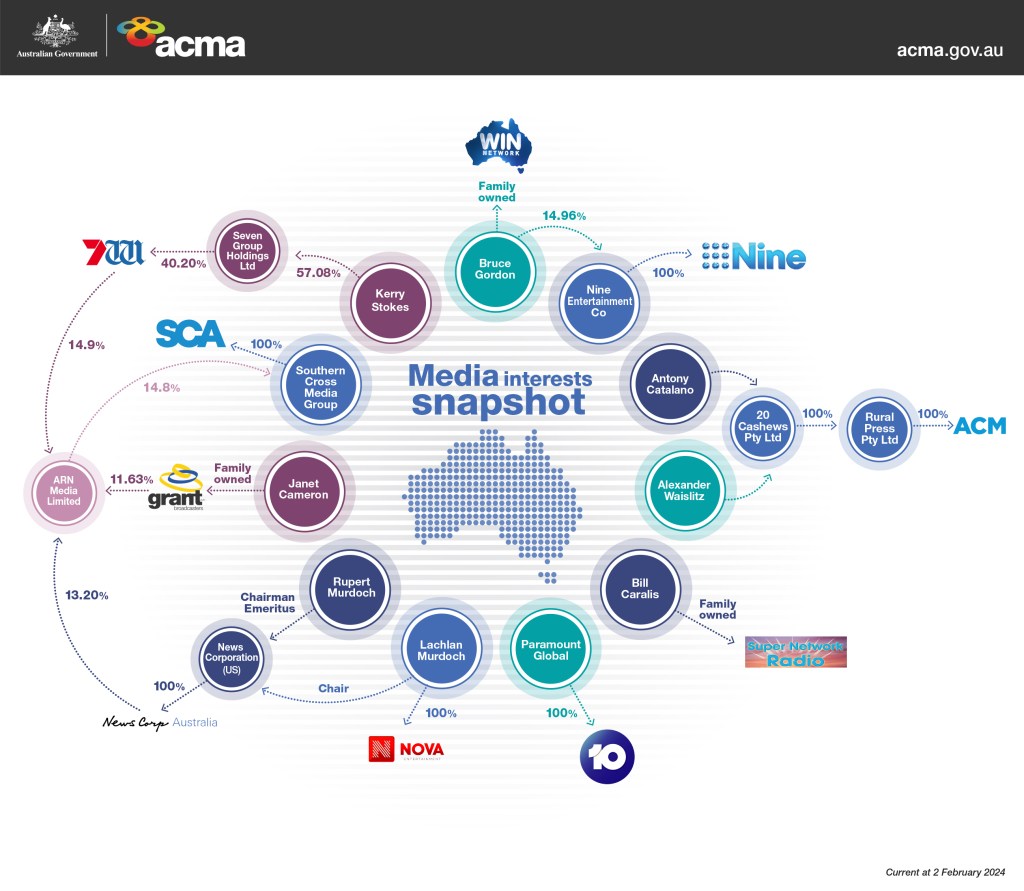
Earlier I asked you why you know what you know. But I think a more ominous but important question is Who told you what you know, and is it true? Well, it would’ve most likely been these people below:
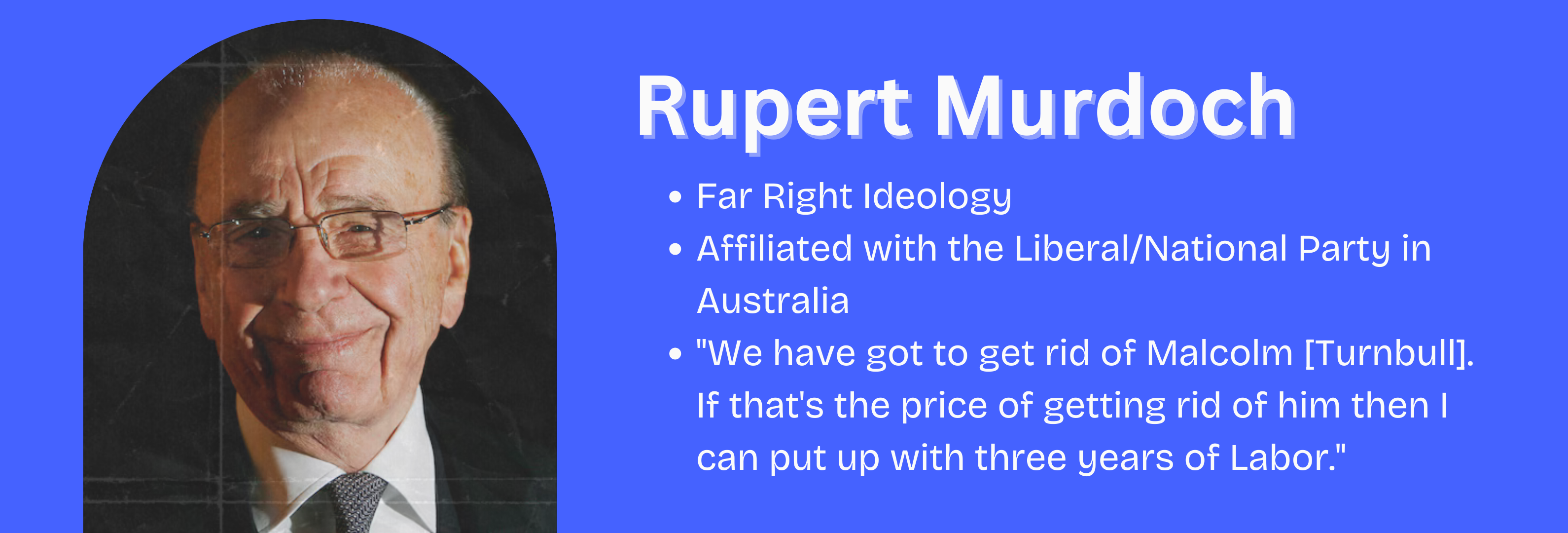
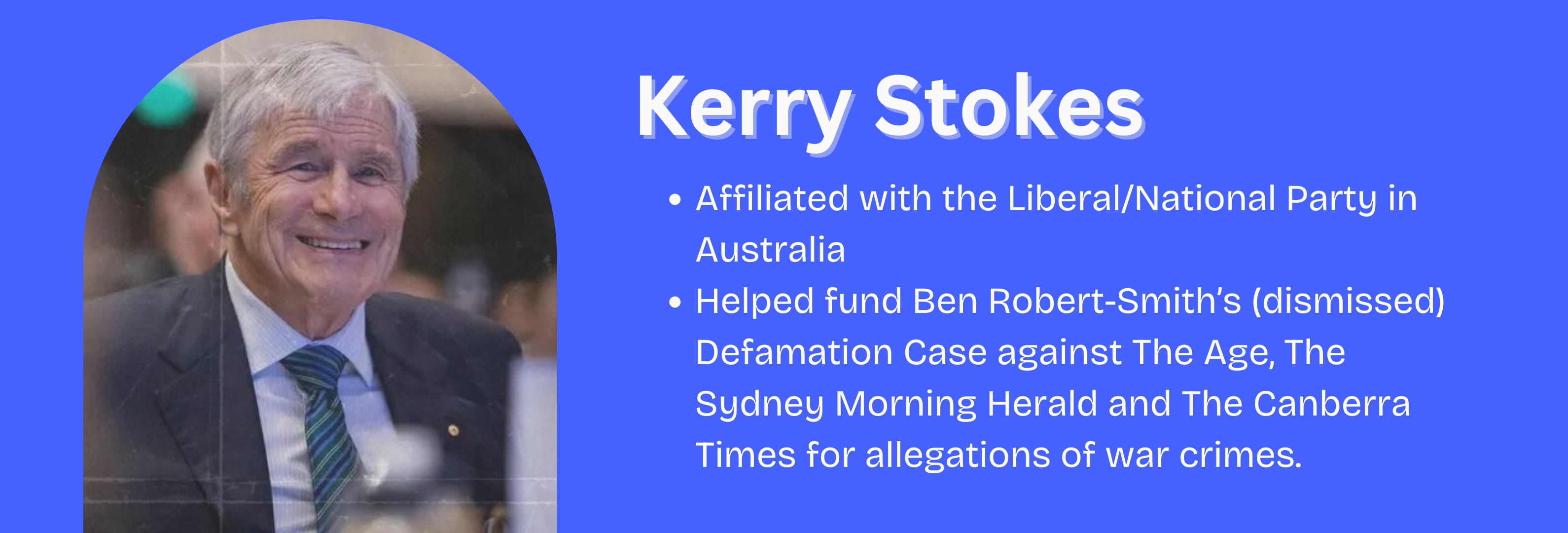
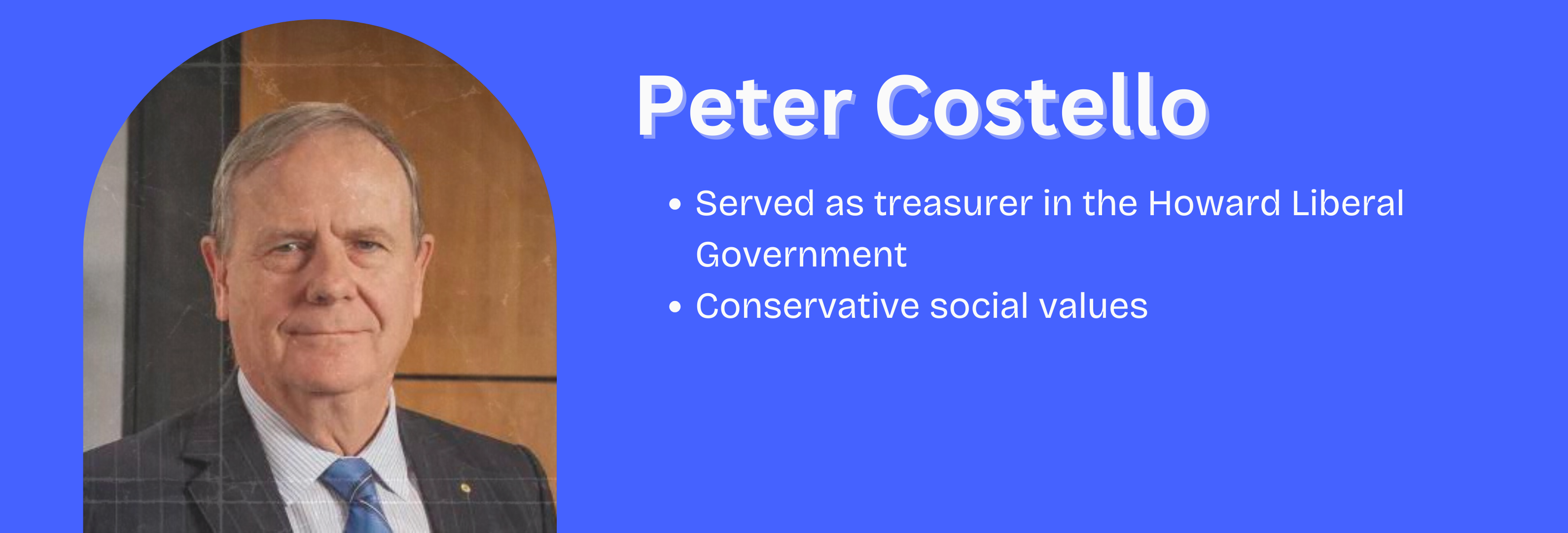
As you can see, news media ownership is very concentrated in Australia. Some notable names are Rupert and Lachlan Mudroch, Kerry Stokes, and Peter Costello (Chairman of Nine Entertainment Co).
What these names have in common are their right-leaning ideologies. Together, they make up a large portion of all news media outlets in Australia and in turn, a large portion of public opinion. The monopolies these companies have created are against public interest because of how inherently bad they are for democracy, threatening our diversity of expression (Barnett 2010).
So after this, do you trust your news sources? Do you trust what you know? Personally, while researching this I became quite alarmed at how much power these big news corporations have over politics and public opinion. You start to pull back the layers and think more critically about how you came to know certain things, and why you have certain biases. I come from a family that watches 7NEWS most nights, but now I think I’ll definitely try to maintain a healthy dose of skepticism while watching.
References
Barnett, S 2010, ‘What’s Wrong with Media monopolies? A Lesson from History and a New Approach to Media Ownership Policy’, MEDIA@LSE Electronic Working Papers, no. 1474-1938.
Casad, BJ & Luebering, JE 2023, Confirmation Bias, Encyclopædia Britannica.
GCF Global 2019, Digital Media Literacy: What Is an Echo Chamber?, GCF Global.
Ling, R 2020, ‘Confirmation bias in the era of mobile news consumption: The social and psychological dimensions’, Digital Journalism, vol. 8, no. 5, pp. 1–9.
Mascaro, L, Tucker, E, Jalonick, MC & Taylor, A 2021, Pro-Trump Mob Storms US Capitol in Bid to Overturn Election, AP NEWS.
Temming, M 2024, Scientists Say: Confirmation Bias, ScienceNewsExplores, viewed 31 March 2024, <https://www.snexplores.org/article/scientists-say-confirmation-bias-definition-pronunciation#:~:text=Allowing%20confirmation%20bias%20to%20control>.



 Lazy Pages
Leave a comment